
Economics Help IGCSE Economics – Elasticity

Elasticity

Interactive multiple-choice revision (IGCSE-style). Check your score after each sub-topic.
2.6 Price elasticity of demand (PED)

Q1. Price elasticity of demand measures:
Q2. Demand is price elastic when:
Q3. Which product is most likely to have elastic demand?
Q4. Which factor is most likely to make demand more elastic?
Q5. If demand is inelastic, an increase in price is most likely to cause total revenue to:

Q6. The formula for price elasticity of demand (PED) is:
Q7. The price of a product rises by 10% and quantity demanded falls by 20%. What is PED?
Q8. The price falls by 8% and quantity demanded rises by 4%. What is PED?
Q9. A 15% rise in price causes a 6% fall in quantity demanded. What is PED (to 1 d.p.)?
Q10. PED is −0.2. Demand is best described as:
Q11. PED is −1.0. This means demand is:
Q12. A firm wants to increase total revenue by raising price. This is most likely to work if demand is:
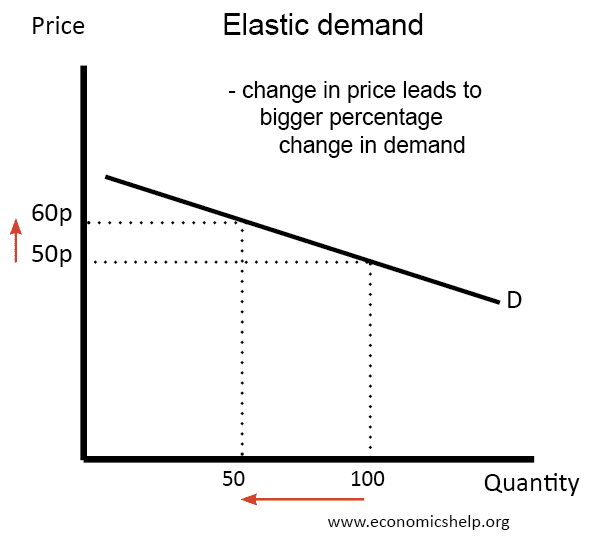
Price elastic demand: large fall in quantity for a small rise in price

Diagram: A relatively small rise in price leads to a large fall in quantity demanded.
Q13. What is the price elasticity of demand (PED) shown in the diagram?
Explanation:
Price rises by 20% and quantity demanded falls by 50%.
PED = %ΔQd ÷ %ΔP = −50 ÷ 20 = −2.5 (elastic demand).

2.7 Price elasticity of supply (PES)

Q1. Price elasticity of supply measures:
Q2. Supply is more likely to be elastic when:
Q3. Which is likely to have inelastic supply in the short run?
Q4. Which change would increase price elasticity of supply?
Q5. The formula for price elasticity of supply (PES) is:
Q6. Price rises by 10% and quantity supplied rises by 30%. What is PES?
Q7. Price falls by 20% and quantity supplied falls by 10%. What is PES?
Q8. A 5% rise in price leads to a 5% rise in quantity supplied. What is PES?
Q9. PES is 0.2. Supply is best described as:
Q10. PES is equal to 1. This means supply is:
Q11. Which factor is most likely to make supply more price elastic?
Q12. Which product is most likely to have inelastic supply in the short run?
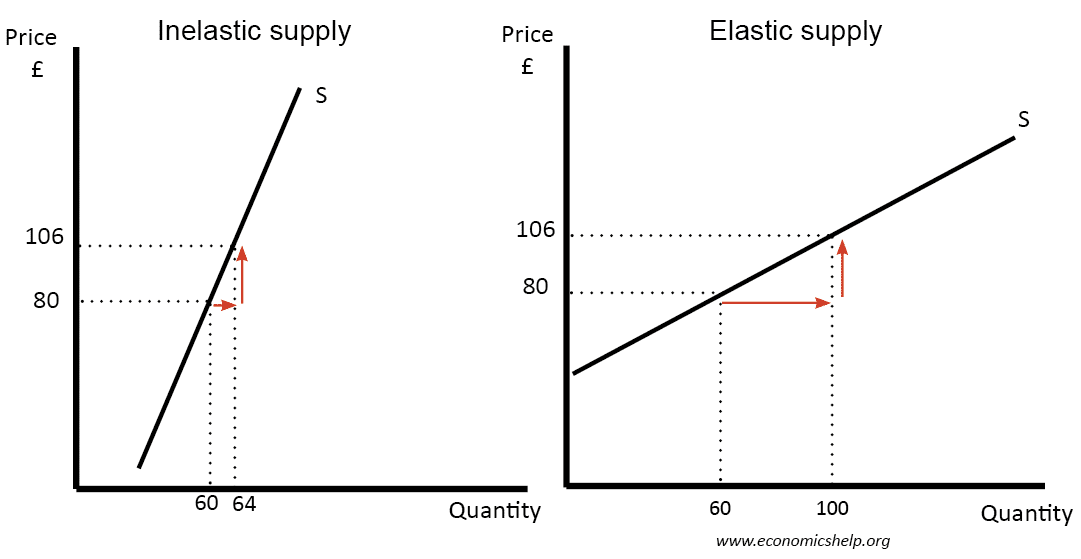
Inelastic and elastic supply curves

Diagram: The left-hand diagram shows relatively inelastic supply.

Q13. Calculate the price elasticity of supply (PES) for the inelastic supply curve (left-hand diagram).
Explanation:
Price rises from £80 to £106
% change in price = (106 − 80) ÷ 80 = 26 ÷ 80 = 0.325 (32.5%)

Quantity supplied rises from 60 to 64
% change in quantity supplied = (64 − 60) ÷ 60 = 4 ÷ 60 = 0.0667 (6.67%)

PES = %ΔQs ÷ %ΔP = 0.0667 ÷ 0.325 ≈ 0.2 (inelastic supply)
Q14. A 10% rise in price leads to a 20% increase in quantity supplied and a 5% fall in quantity demanded.
Which of the following is correct?

Uses of elasticity

Q1. Why might a government tax goods with inelastic demand?
Q2. A firm facing elastic demand is most likely to increase revenue by:
Q3. Why is elasticity important to producers?
Q4. Why is price elasticity of supply important to firms?